Plenty of players win the middlegame and then let the win slip with a few loose endgame moves. The endgame — when only a handful of pieces remain — is decided by precise technique and one big idea: tempo. This guide covers "the opposition" and "the move," how to convert an extra piece, and the king endings that come up again and again.
What is "the opposition" in checkers?
In the endgame, the game often turns on which player is forced to move and give ground. Holding "the opposition" means maneuvering so that your opponent runs out of safe moves first and must retreat, abandon a square, or walk into a capture. With few pieces on the board, whoever is compelled to move is frequently the one who loses — so controlling the tempo is everything.
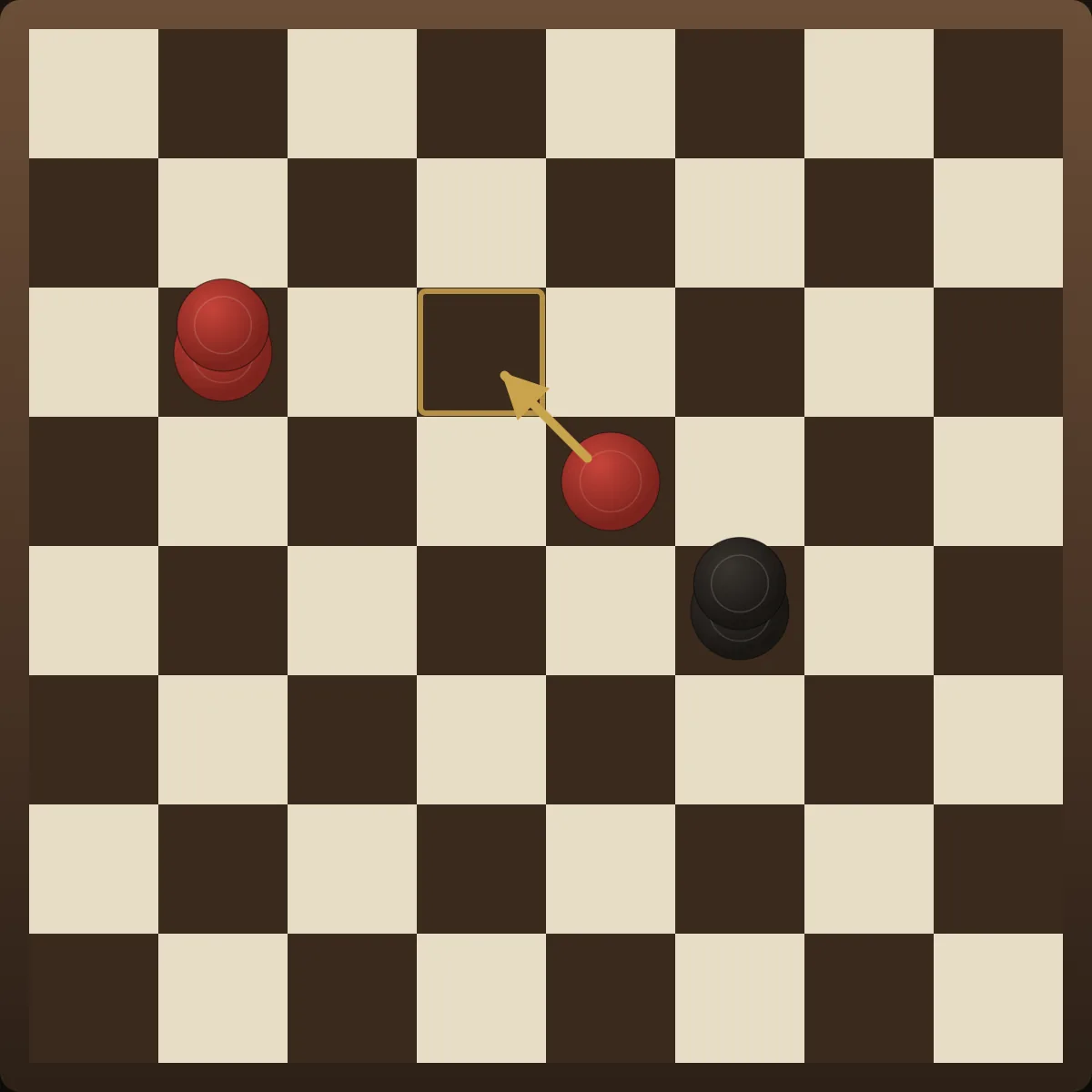
What is "the move" and how do you know who has it?
"The move" is the tempo concept behind the opposition: in many king-and-piece endings, one side is fated to run out of useful moves before the other. Experienced players can tell at a glance who "has the move," because it predicts who will be squeezed. You can work it out by counting — but even a rough feel for "if we both just shuffle, who runs out of safe squares first?" will win you endings you used to draw or lose.
How do you convert an extra piece?
If you reach the endgame a piece ahead, the plan is simple to state: trade pieces evenly. Every even exchange brings you closer to a position where your extra piece is decisive — typically an extra king that the opponent simply cannot match. Don't get fancy and don't avoid trades out of caution; with an extra piece, simplification is your friend. Trade down, crown your extra man, and use it to pick off what's left.
Why are kings everything in the endgame?
By the endgame, regular pieces are racing for the king's row, and the player who crowns more kings usually wins. A king's ability to move and capture in both directions lets it patrol, chase, and corner enemy pieces that can only crawl forward. Getting a king first in the endgame is often the whole game — so push a passed piece toward promotion, and block your opponent's.
How do you win a king-versus-king ending?
A lone king against a lone king is a draw — neither can force a capture. To win, you need a material or positional edge: two kings against one can corner and trap the single king, usually by driving it to the edge or into a double corner where its moves run out. The technique is to use one king to restrict the enemy's squares while the other delivers the capture. Patience and tempo, not brute force, finish these.
What is a "hold" and how do you break one?
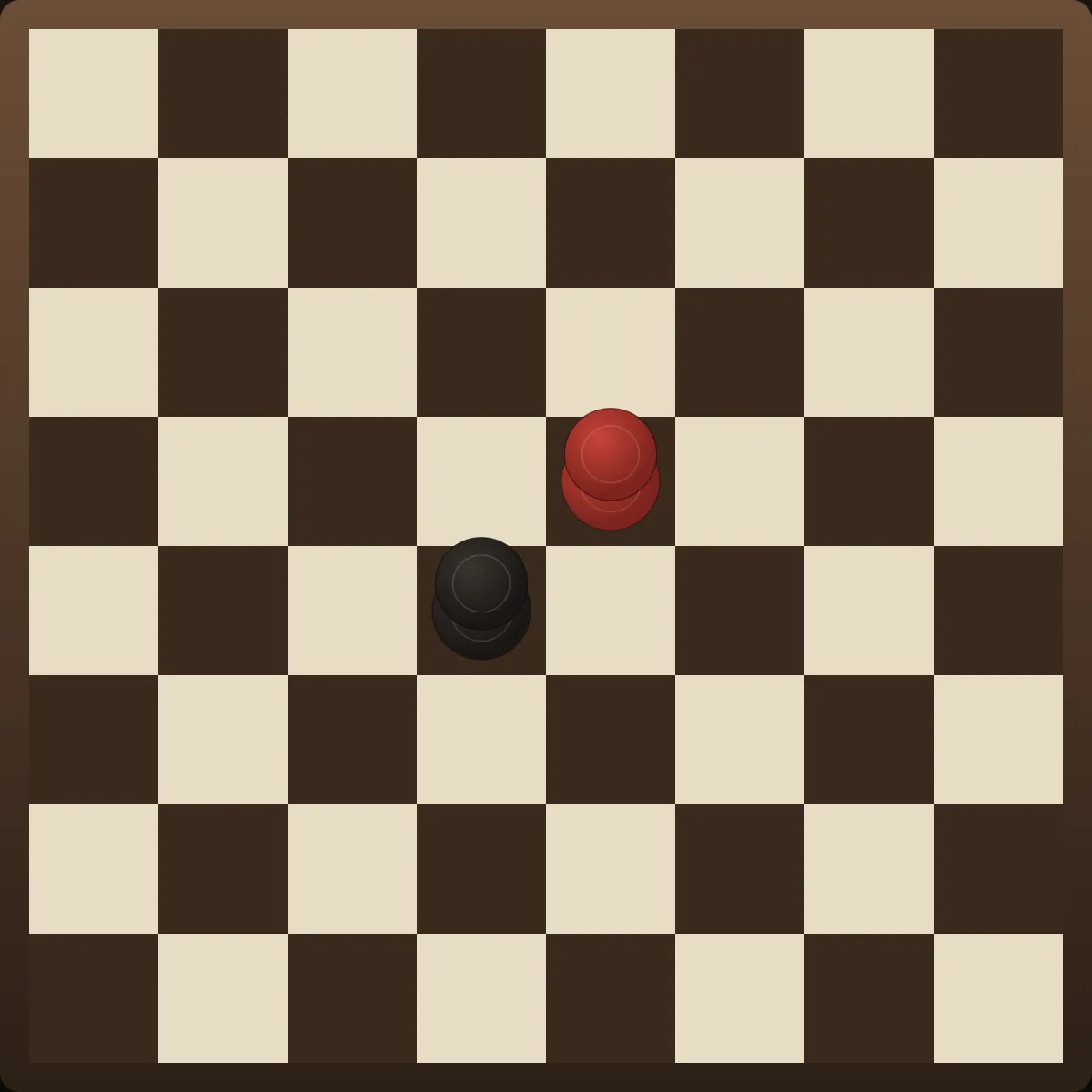
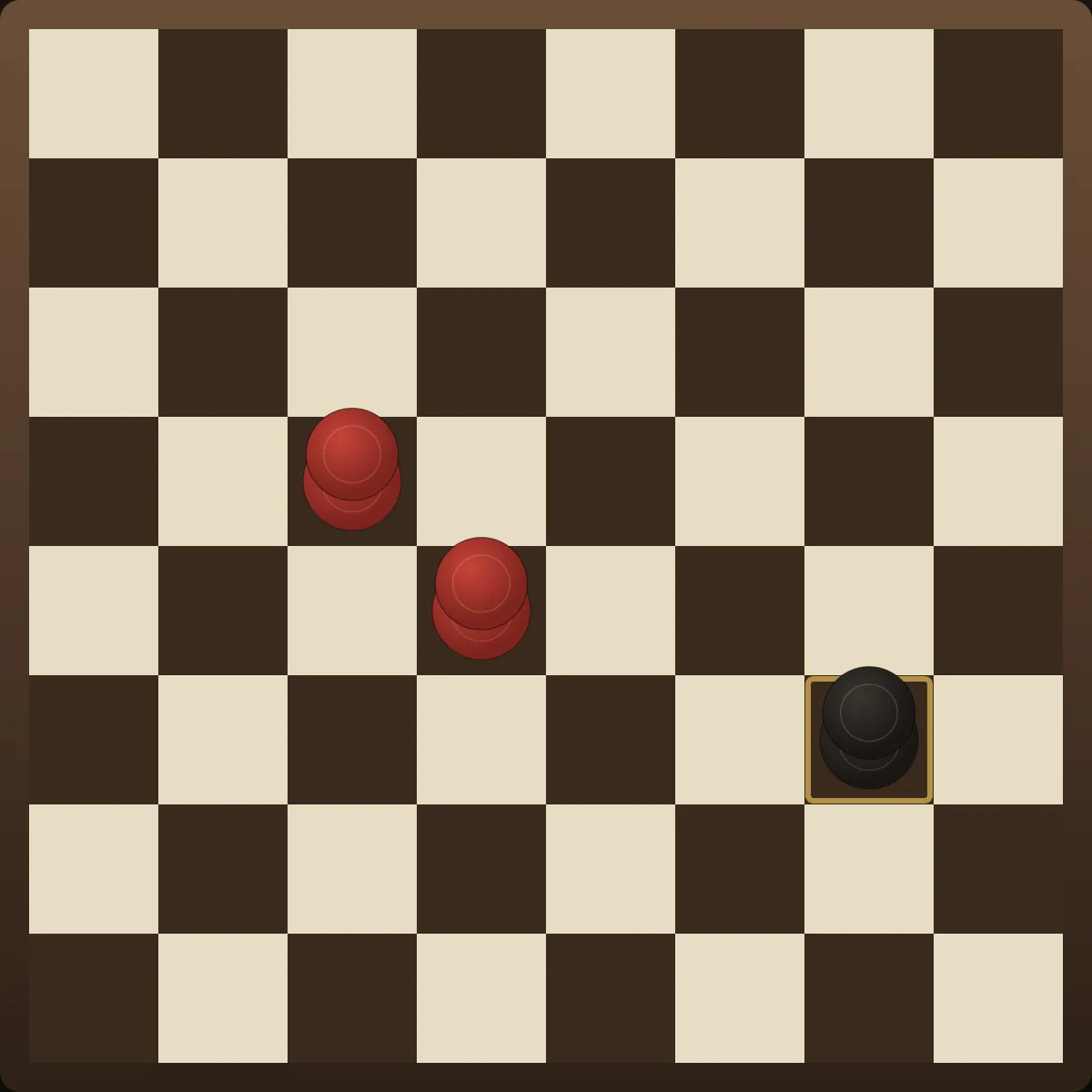
A hold is when a few of your pieces pin or block a larger enemy force — for example, occupying the double corner so the opponent can't make progress. Holds can save lost-looking positions or steal a draw. Breaking one requires creating a second threat the defender can't meet without releasing the hold, often by sacrificing a piece to force the position open. If you're worse, look for a hold; if you're winning, watch out for the opponent setting one.
The double corner
The two "double corner" areas of the board (where a piece has two diagonal escape squares) are the safest refuges for a defending king, which is why endgame attacks so often aim to drive the enemy away from them. Knowing that the double corner is hard to attack — and that a single king can hold there for a long time — shapes how you push for a win and how you defend a worse position.
Endgame principles, short
- A piece up? Trade evenly and simplify toward a winning king ending.
- Race for the king's row; crown before your opponent does.
- Use tempo — "the move" — to force your opponent to give ground.
- Lone king vs lone king is a draw; you need an extra piece or a corner to win.
- Drive a defending king out of the double corner before you try to finish.
Bring it together
The endgame is where a material edge — usually one you won with a tactic — gets cashed in. Win a piece, simplify, crown a king, and use tempo to finish. Practice converting small advantages against the computer on Hard, which defends endgames stubbornly: play now.