The king is the most powerful piece in checkers, and getting the first one is often the moment a game turns. This guide covers how a king is made, exactly how it moves and captures, the backward-movement rule that trips people up, and how kings differ across variants.
How do you get a king in checkers?
You crown a king by moving one of your pieces all the way to the opponent's back row — the row of squares on the far edge, called the king's row. The moment a piece lands there it is promoted to a king. In a physical game you mark it by stacking a captured piece on top, which is why a king is shown as a double-height, stacked piece.
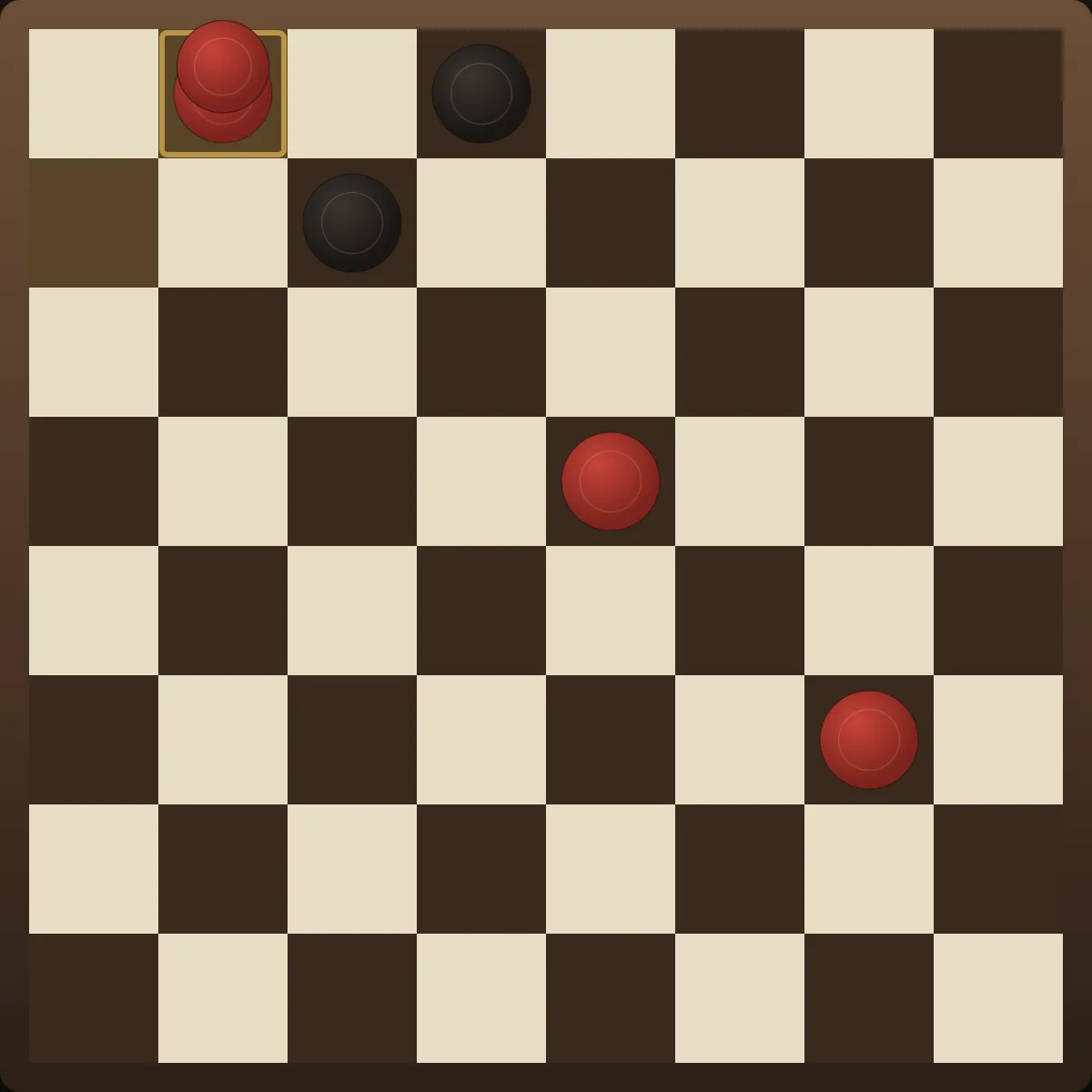
What can a king do that a regular piece can't?
A king can move and jump diagonally both forward and backward; a regular piece (a "man") can only go forward. In standard American checkers a king still moves one square at a time, but its freedom to retreat and to attack from behind makes it far more dangerous — it can chase, defend, and set up captures a regular piece never could.
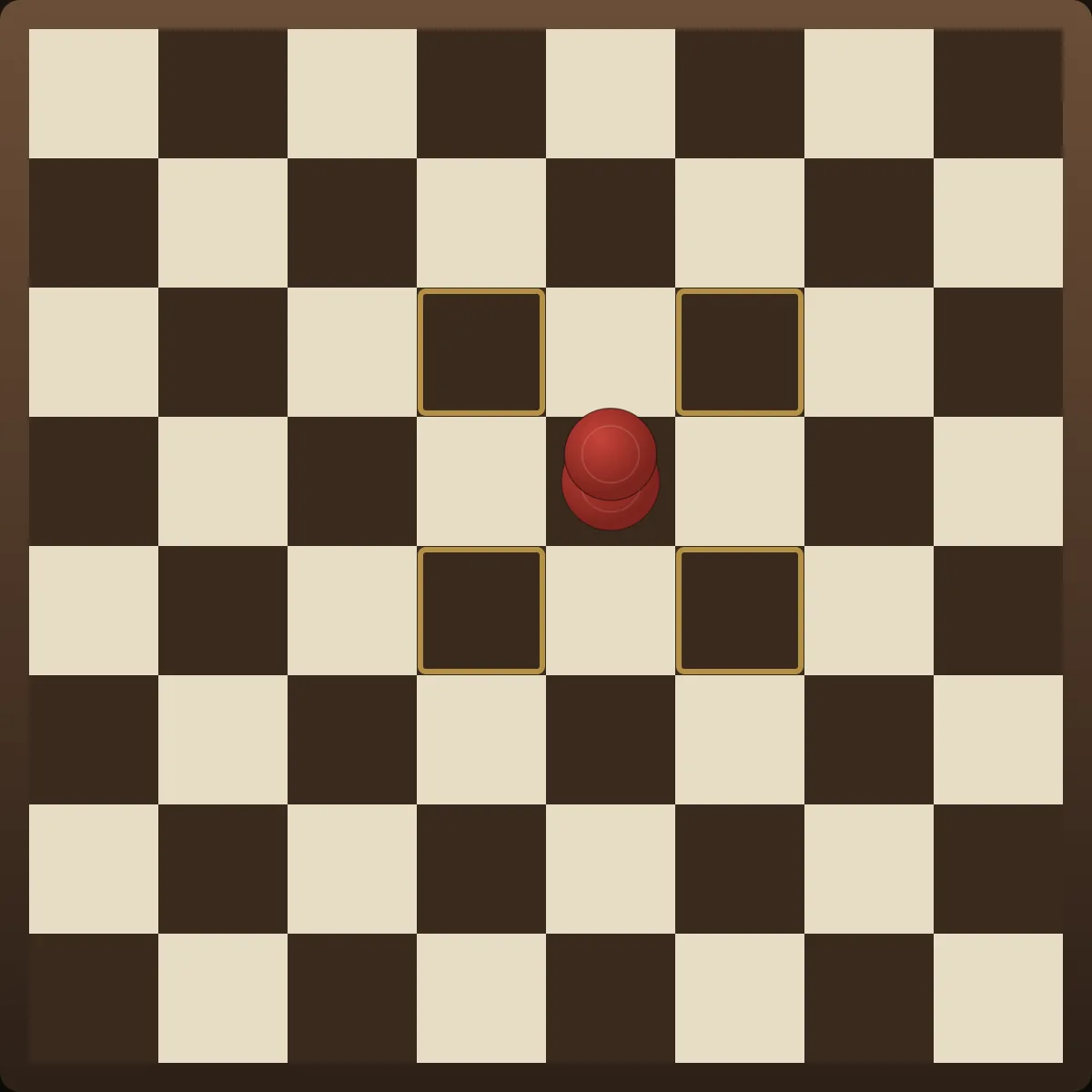
Can a king move backwards in checkers?
Yes. Kings are the only pieces that can move and jump backward in standard checkers. Regular pieces are forward-only; the king's backward freedom is the entire point of being crowned. Within a single multi-jump, a king can even combine forward and backward jumps in one turn.
Does a king have to jump too?
Yes. The mandatory-capture rule applies to kings exactly as it does to regular pieces: if a king can make a capture, it must, and it must complete any available multi-jump. A king in position to jump cannot decline, even when the jump puts it in danger — which is something a sharp opponent can use against you.
What happens if a piece reaches the king's row mid-jump?
In standard American checkers, if a piece reaches the king's row during a jump, it is crowned and its turn ends there — it does not keep jumping that turn as a king. (Some variants, like Russian checkers, do let it continue jumping immediately as a king. Each variant guide notes its own rule.)
Can you jump a king?
Yes. Kings can be captured just like regular pieces — a regular man can jump a king (moving forward, as always), and a king can jump another king. There's no special protection for kings; they're just harder to trap because they can retreat.
Why is the first king so important?
Because a king can attack from any diagonal and retreat to safety, the player who crowns first usually gains the initiative — they can pick off pieces and defend at once. This is why strong players try to hold their own back row as long as possible: keeping pieces on your king's row denies the opponent the squares they need to crown. Delaying their first king buys you time and control.
Kings across the variants
The biggest difference between variants is the king. American checkers uses a "short" king that moves one square. International, Brazilian, and Russian draughts use flying kings that slide any number of empty squares along a diagonal and can capture a piece from a distance, landing anywhere beyond it. That makes kings vastly more powerful in those games. On Checker Games, flying-king variants show their kings with a distinct marker so the rule is clear at a glance.
Put it into practice
Now that you know how kings work, the fastest way to start crowning them is good positioning — read the Checkers Strategy guide, or jump straight into a game.