If openings set the table, tactics are where the meal is won. Almost every decisive checkers game turns on one player winning more material than they give up — usually through a forced sequence the other player couldn't avoid. This guide covers the single most important tactic in the game, how the forced-capture rule becomes a weapon, and how to stop walking into shots yourself.
What is the two-for-one shot?
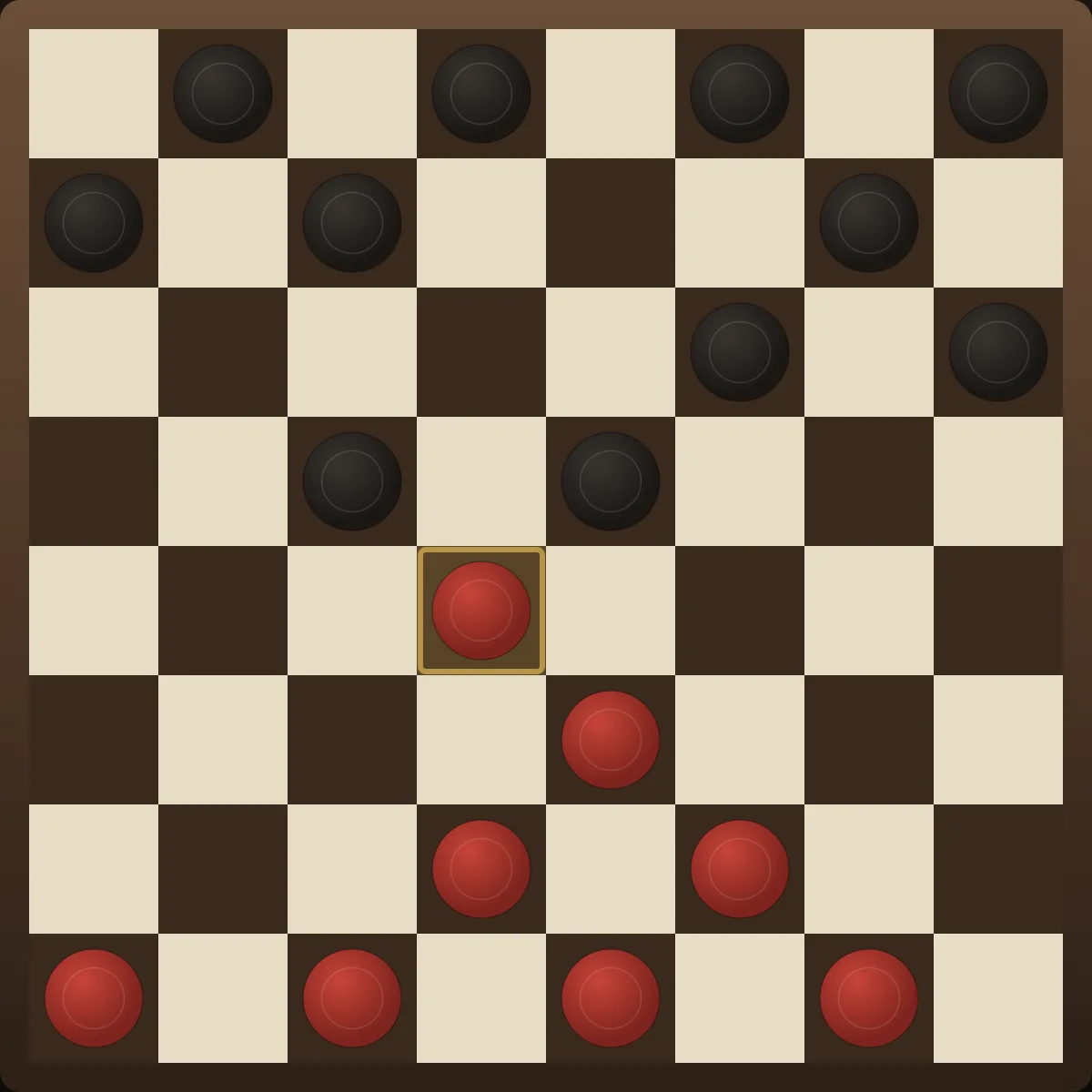
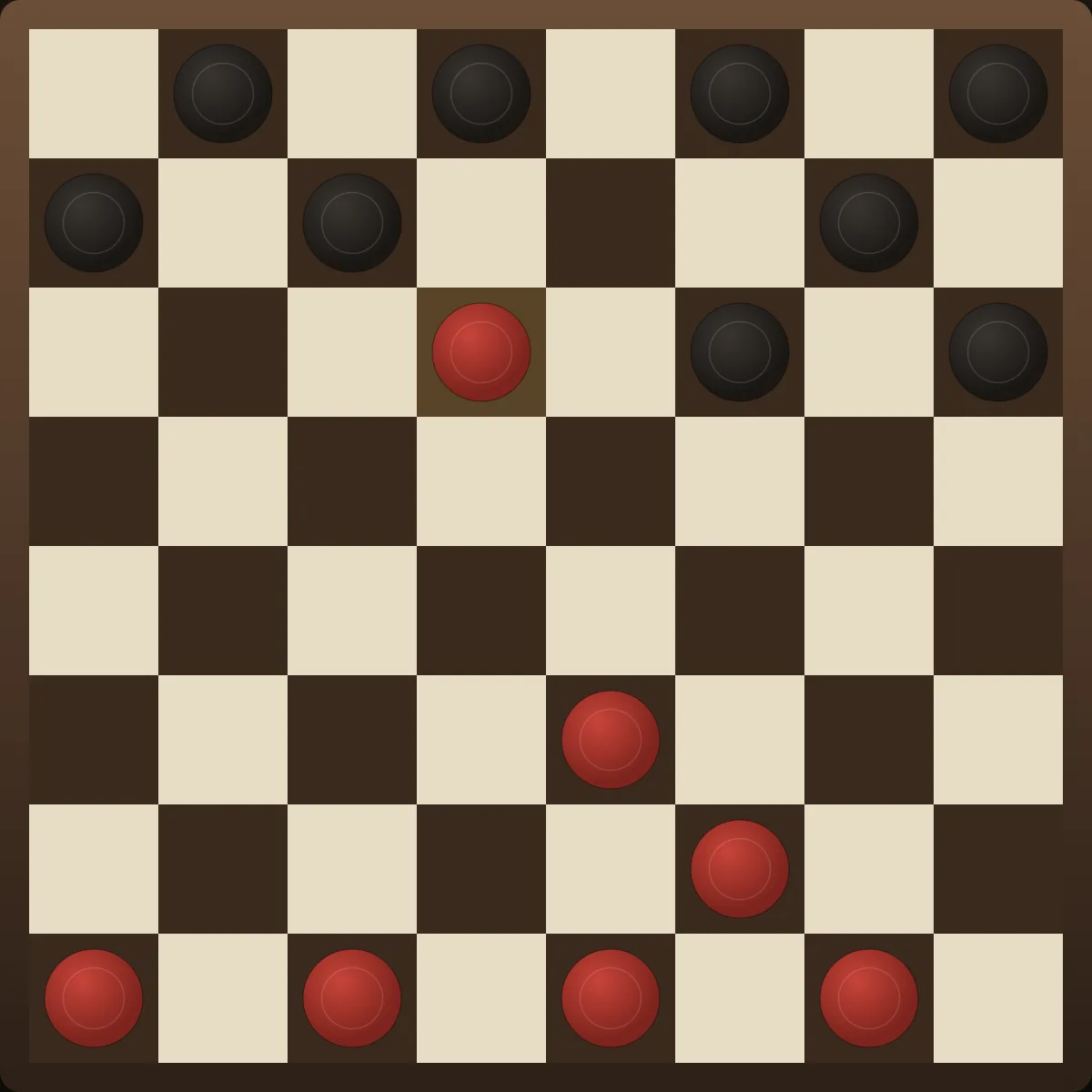
The two-for-one shot is the most important tactic in checkers: you sacrifice one piece to force your opponent into a capture, and on your next move you jump two of theirs in return. Because capturing is mandatory, your opponent has no choice but to take the piece you offer — and the moment they do, their pieces are lined up for your double jump. You give one, you take two, and you come out a piece ahead.
Why does the forced-capture rule make tactics possible?
In checkers you must take an available jump. That sounds like it simplifies the game, but it does the opposite — it lets you control your opponent's move. By offering a piece in the right spot, you can force them to capture in a way that breaks their formation, pulls a defender out of position, or sets up your reply. The whole art of checkers tactics is arranging positions where your opponent's only legal move is the one that loses.
How do you set up a shot?
A shot is usually an exchange that you've calculated one move further than your opponent. The classic pattern, often arising from a 3-on-3 cluster: you advance a piece your opponent is forced to capture; that capture lands their piece where your next jump can take two. Strong players don't stumble into these — they steer toward positions where the geometry of forced captures favors them. Learning to recognize the shape (your piece offered, their forced jump, your double waiting behind it) is the biggest single jump in skill you can make.
The two-for-one in practice
Picture a balanced cluster of pieces in the center. You push a man forward into a square where your opponent can — and therefore must — jump it. That jump carries their piece onto a diagonal where one of your other pieces now has a double jump over two of theirs. You lost one, you took two, and you're a piece up with a cleaner position. From a one-piece advantage, careful play usually converts to a win.
Can you give up two to win three?
Yes — the same idea scales. Sometimes the winning line is to sacrifice two pieces to force a sequence that captures three, often by forcing one jump, then immediately forcing another. These deeper combinations come from the same root skill: seeing that your opponent's forced replies funnel them into a bigger loss. They look spectacular but they're just longer two-for-ones.
What are checkers traps?
A trap (sometimes called "the Shot" with a capital S) is a position you steer toward where the opponent's natural move walks into a forced losing sequence. Many openings have known traps a few moves deep. You don't need to memorize them all — what matters is the habit of asking, before every move, "if I play this, what can my opponent force in reply?"
How do you avoid walking into a shot?
The forced-capture rule cuts both ways, and most beginner losses are walking into a two-for-one without seeing it. Before you move — especially before you make a capture — check the position your move leaves: can your opponent now offer a piece that forces you into a jump, setting up a double on you? If a capture looks free, be suspicious; free pieces in checkers are often bait. Slowing down for that one check will win you more games than any opening.
Tactics and material: what a one-piece lead means
A single extra piece is a real, often decisive advantage in checkers — there are no powerful individual pieces to compensate, so material tells. Once you're a piece up, simplify: trade pieces evenly to reach an endgame where your extra man becomes an extra king and overwhelms. Winning material with a shot, then converting it cleanly, is the core winning pattern of the whole game.
Drill it
Tactics stick through repetition. Play the computer on Medium and hunt for two-for-one shots every move — both yours and the ones you need to avoid — then step up to Hard, which will punish you the moment you stop checking. Play now. For the endgame technique that converts your extra piece into a win, read the Endgame guide.