Checkers is a pure game of skill — no dice, no hidden cards, just the board in front of you. That means almost every loss is a decision you can learn to make better. This is the complete winning game plan, from the first move to the last: what to do in the opening, how to win material in the middlegame, and how to convert in the endgame. Each section links to a deeper guide if you want to go further.
Can you win at checkers every time?
No — and it's worth being honest about why. Checkers was solved by computers in 2007, and with perfect play by both sides the game is a draw. You cannot force a win against flawless defense. But against virtually every real opponent you can win consistently, because real players make mistakes and a handful of habits let you punish them. This guide is those habits.
The five things that win checkers games
- Control the center. Central pieces have more moves and more threats; edge pieces are starved of options.
- Keep your pieces supported. A lone advanced piece is easy to capture; pieces that back each other up can't be taken cheaply.
- Hold your back row. Keeping your king's row intact denies your opponent the squares to crown a king.
- Hunt for the two-for-one shot. The core tactic — sacrifice one to take two — wins most decisive games.
- Check what your opponent can force before every move. Most losses are walking into a shot you didn't see.
Do these five things and you'll beat the large majority of players.
Winning the opening
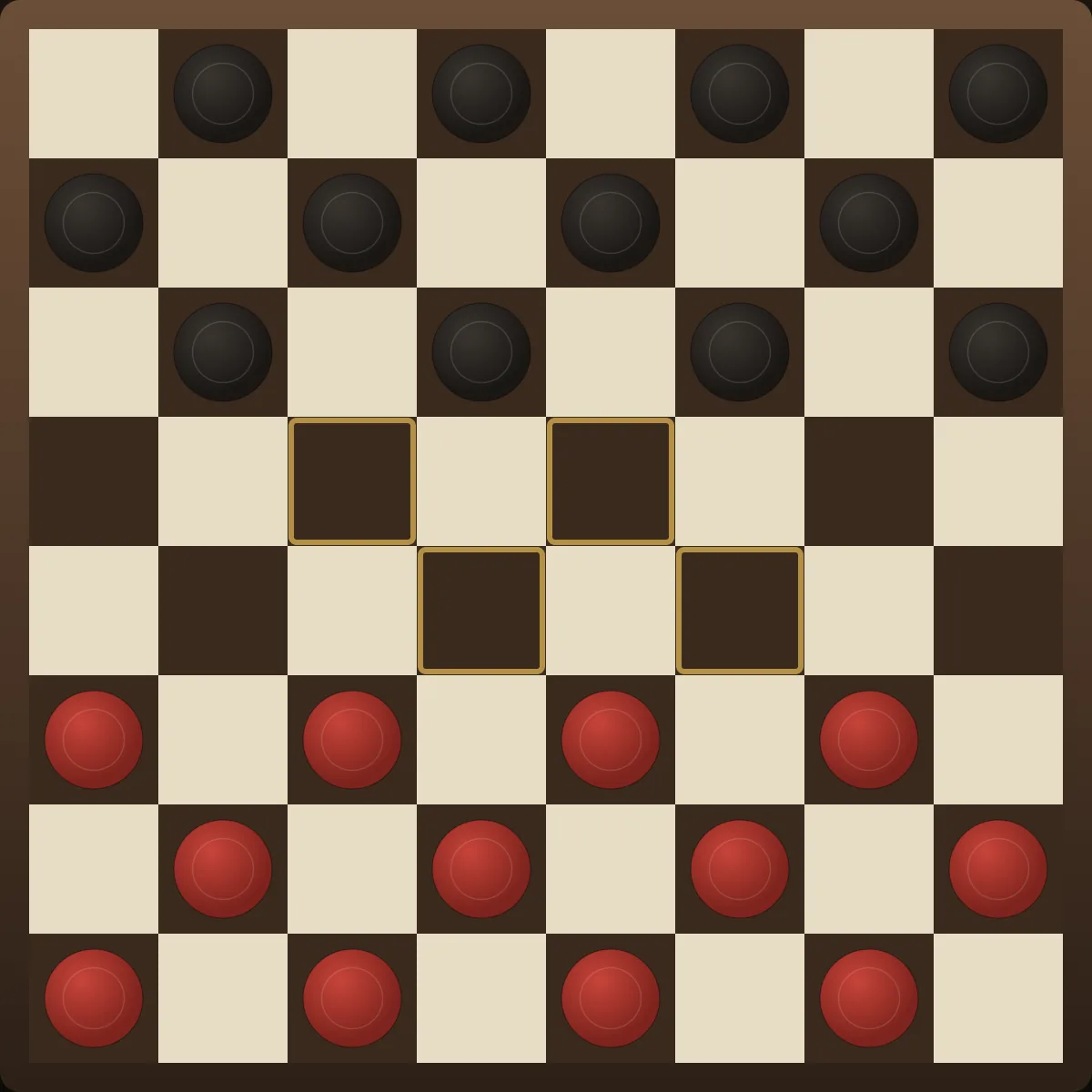
Open by claiming the center. The reliable choice is "Old Faithful" — moving 11-15 — which grabs a central square and keeps your structure flexible. Resist the beginner instinct to push pieces to the edges for safety; edge pieces lose mobility and you slowly get squeezed. The opening's job isn't to win outright — it's to hand you a healthy, supported position to attack from. → Full detail in Checkers Openings.
Winning the middlegame: take material
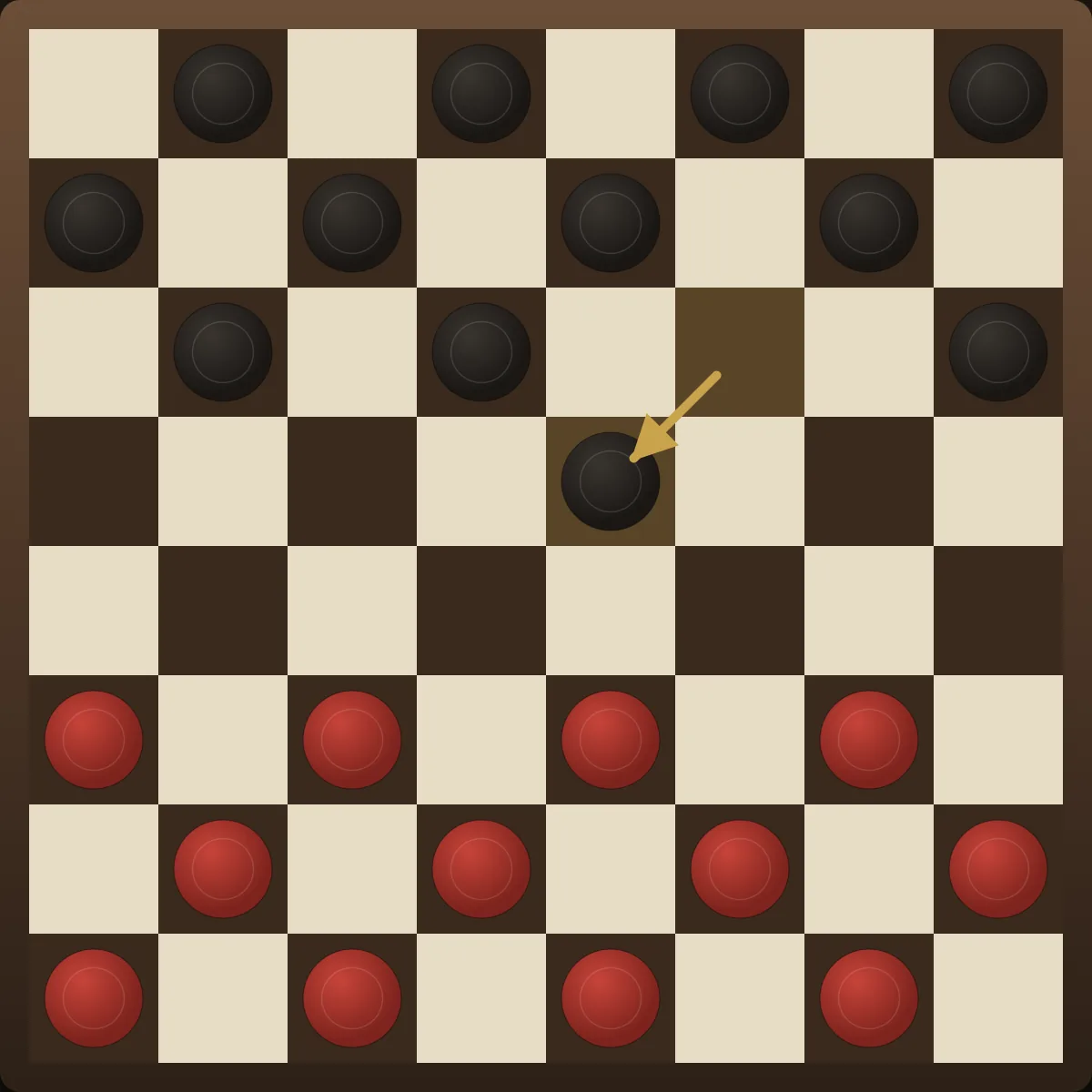
The middlegame is won by winning pieces, and the tool is the forced-capture rule. Because a player must take an available jump, you can offer a piece to force their capture, then jump two of theirs in reply — the two-for-one shot. Learn to see that shape, and learn to spot it coming the other way. A free-looking piece is usually bait. Winning even one piece, cleanly, is typically enough to win the game. → Full detail in Checkers Tactics.
Winning the endgame: convert your edge
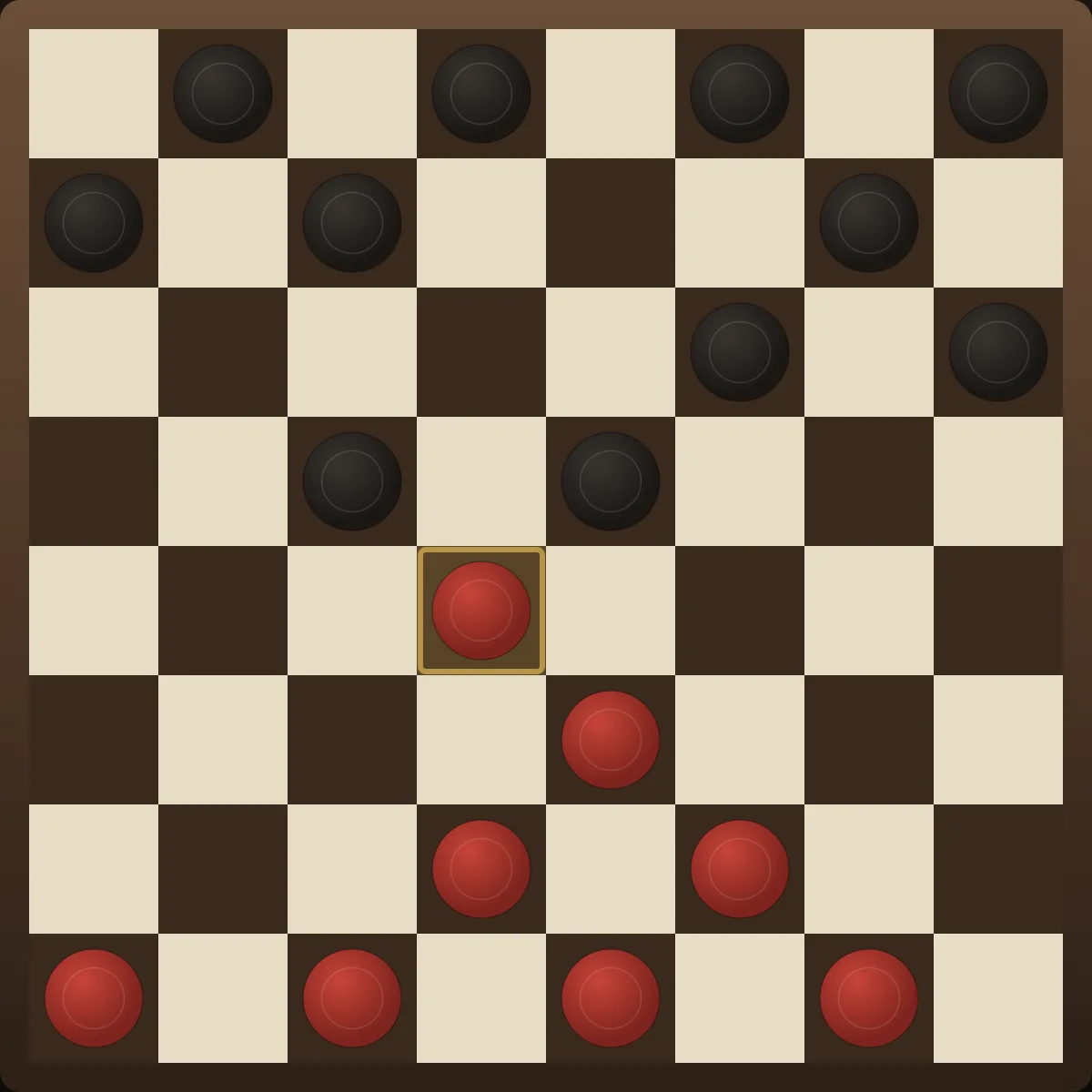
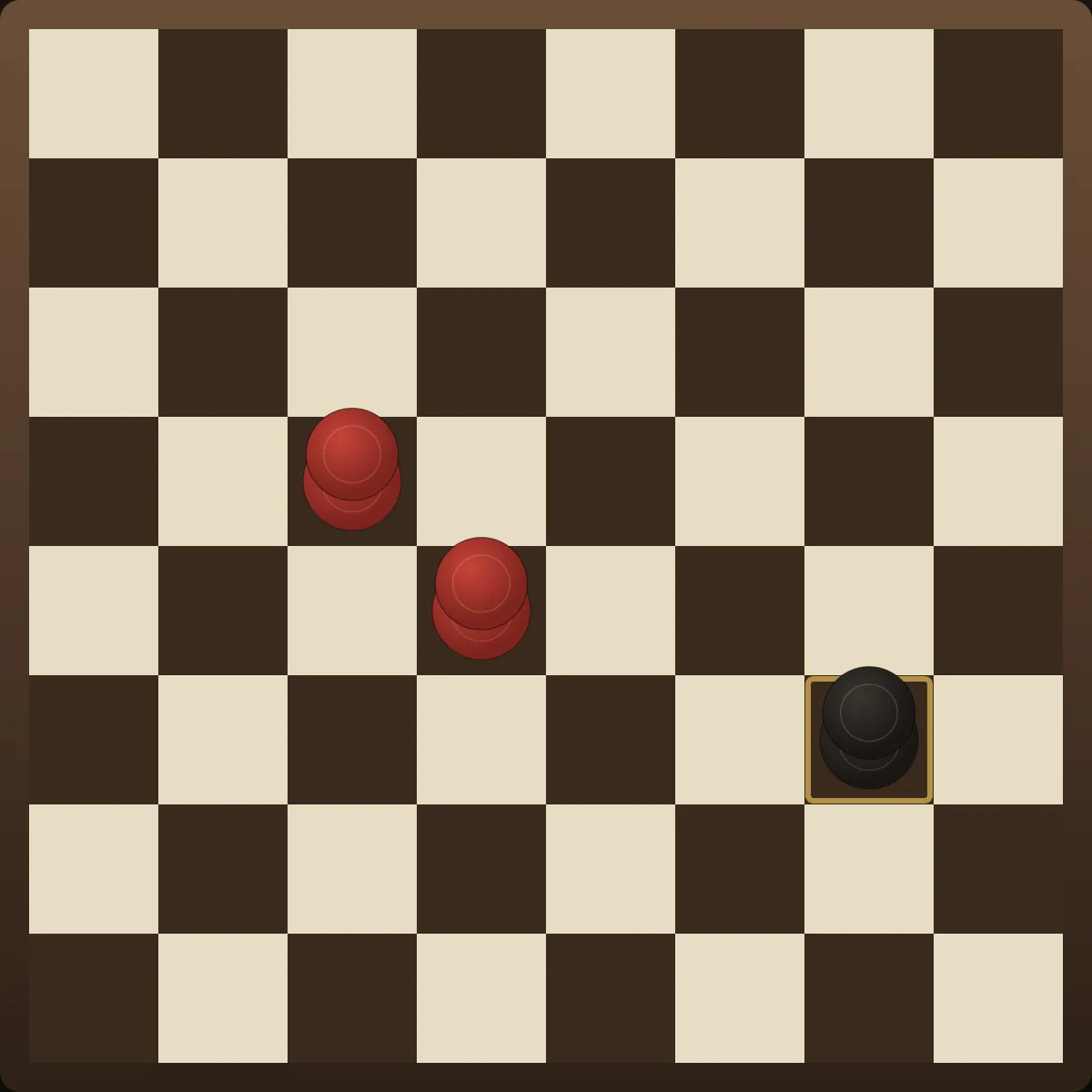
Once you're a piece ahead, don't get fancy — trade pieces evenly and simplify. Each even exchange brings you closer to an ending where your extra piece becomes an extra king the opponent can't match. Race for the king's row, crown first, and use tempo — "the opposition" — to force your opponent to give ground. A lone king against a lone king is a draw, so you need that extra piece or a cornering attack to finish. → Full detail in Checkers Endgame.
The mistakes that lose games
- Hugging the edges. Feels safe, costs you mobility, loses slowly.
- Grabbing free pieces. Often a two-for-one trap; check first.
- Giving up the back row too early. Hands your opponent an easy king.
- Avoiding trades when ahead. When you're up material, simplify — complications only help the player who's behind.
- Rushing a lone piece to king it. If it gets jumped on the way, you've spent moves for nothing.
Is checkers skill or luck?
Entirely skill. There's no chance element — both players see the whole board at all times, so outcomes come down to decisions. That's good news: every improvement you make shows up directly in your results. The forced-capture rule even gives checkers a distinctive kind of depth, because you can compel your opponent's moves in a way chess never allows.
How to actually get better, fast
Play often, and play a stronger opponent. Start against the computer on Medium until two-for-one shots come naturally, then move to Hard, which punishes loose play and defends endgames stubbornly. After each loss, find the move where it slipped — usually a shot you walked into or an endgame you misplayed — and you'll improve faster than any amount of reading.
Put the plan to work
You now have the whole arc: claim the center, win material with a shot, convert in the endgame. Start a game and run the plan — play now. Go deeper any time with the Openings, Tactics, and Endgame guides.