Checkers is a pure game of skill — no dice, no hidden cards, just the board in front of you. That means almost every loss comes down to a decision you can learn to make better. This guide covers the strategy that actually moves your win rate: how to open, how to use the forced-capture rule as a weapon, the single most important tactic in the game, and how to close out an endgame. Read it, then go beat the computer on Hard.
What's the best first move in checkers?
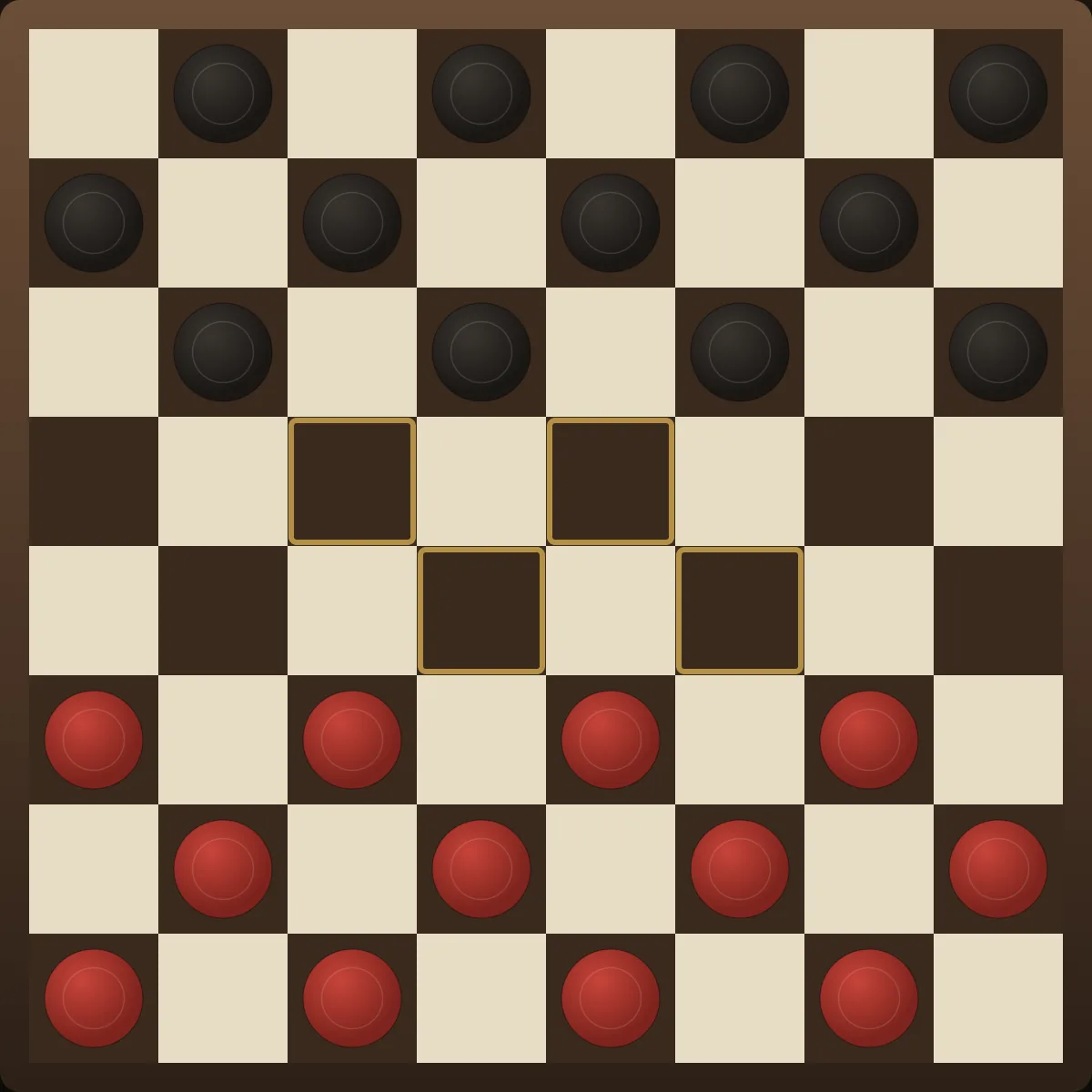
The most popular opening is "Old Faithful" — advancing the piece at square 11 to 15 — because it stakes an immediate claim to the center. From there, controlling the middle of the board gives your pieces more squares to move to and more captures to threaten. More aggressive players favor the Cross and Bristol openings, which push for early control but can leave pieces exposed; they suit experienced players who can calculate the follow-ups.
Why is controlling the center so important?
Pieces in the center have the most options — more directions to advance and more pieces to threaten — while pieces shoved to the edge of the board are starved of moves. Beginners often hug the edges because edge pieces can't be captured from the side, but that's a trap: you trade safety for mobility and slowly get squeezed. Build toward the center, keep your pieces supported, and you dictate the pace.
What is the two-for-one shot?
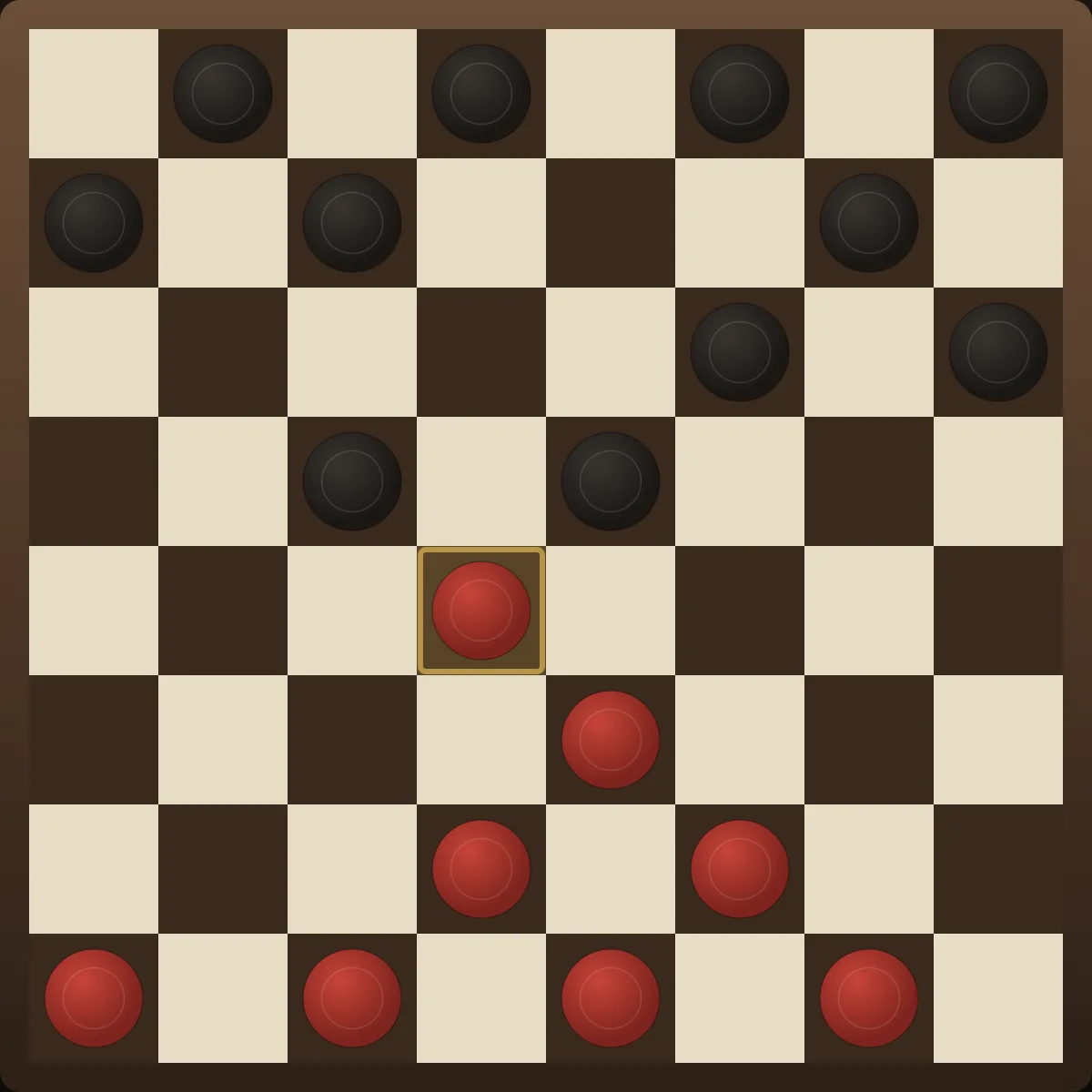
This is the single most important tactic in checkers: sacrifice one piece to force your opponent's capture, then jump two of theirs in return. Because capturing is mandatory, you can offer a piece knowing they're obligated to take it — and the moment they do, you spring a double jump. Beginners stumble into these by accident; strong players set them up on purpose. Learning to see two-for-one shots, both yours and your opponent's, is the biggest single jump in skill you can make.
How do you use forced captures as a weapon?
Because every available jump is mandatory, you can steer your opponent. Offer a piece in a spot where their only legal reply hands you a better capture, or breaks up their formation, or pulls a defender out of position. The forced-capture rule cuts both ways, though — always check, before you move, whether your intended move lets them force a capture back on you. Most blunders are walking into a shot you didn't see.
Should you keep your back row?
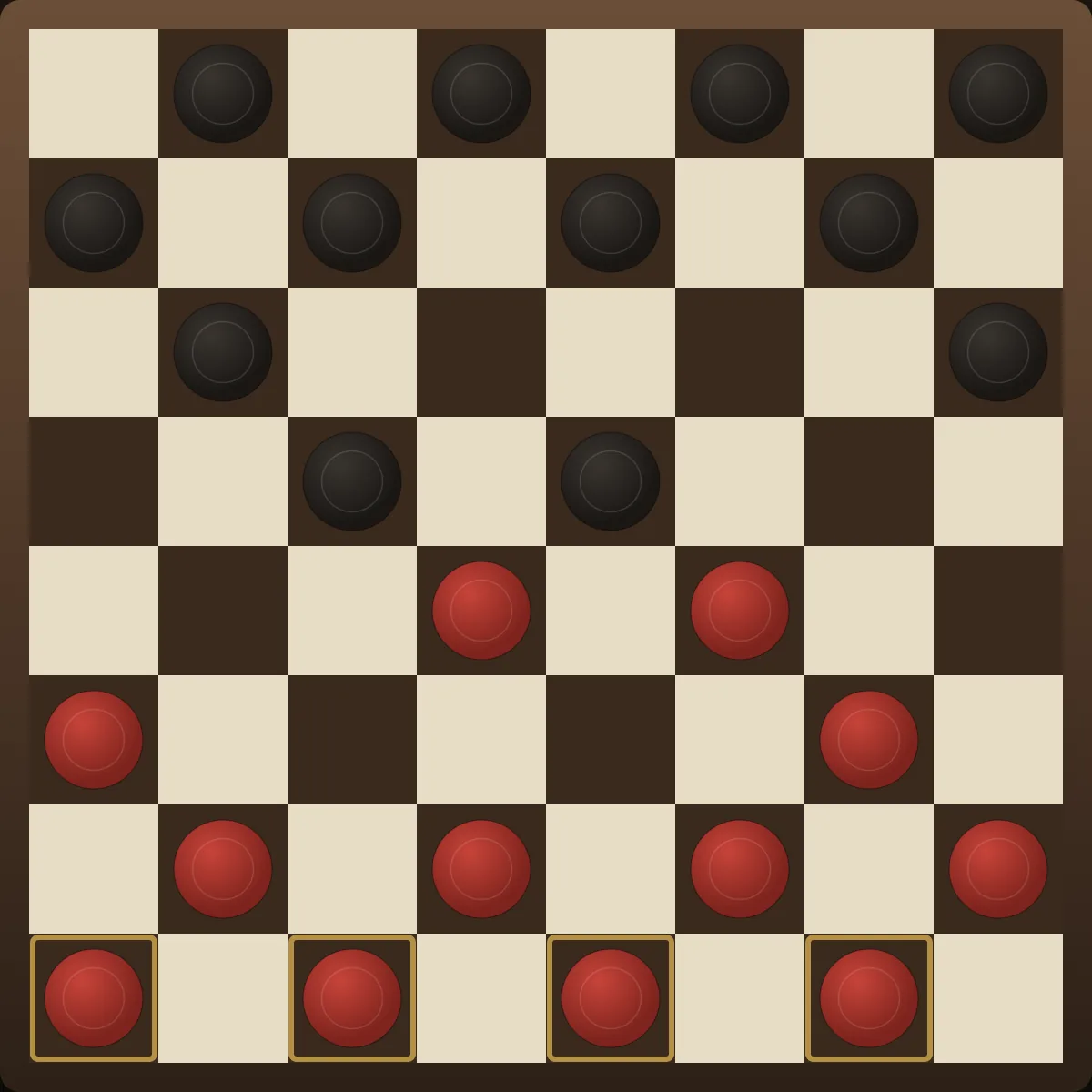
Yes, for a while. Holding the pieces on your own back row (the king's row) denies your opponent the squares they need to crown a king. A king is far more powerful than a regular piece, so delaying the opponent's first king buys you time and initiative. Eventually you'll have to advance them, but don't give up the back row cheaply early on.
How do you build a strong formation?
Keep your pieces supported rather than isolated. A lone advanced piece is easy to jump; a piece backed by others behind it is protected, because capturing it would expose the attacker. A common idea is a phalanx or pyramid shape — connected pieces that defend each other and advance together. Avoid the temptation to send single pieces deep into enemy territory.
What is "the opposition" in the endgame?
In the endgame, with few pieces left, the game often turns on tempo — which player is forced to move and give way. Holding "the opposition" means maneuvering so your opponent runs out of safe moves first and has to retreat or sacrifice. It's subtle and it's where games between good players are decided, but even a basic feel for "who has to move" will win you endings you used to draw or lose.
How do you get a king quickly?
Push toward the king's row using supported advances and look for triple-jump opportunities that carry a piece the full length of the board in one turn — a classic way to crown fast. But don't rush a lone piece forward just to king it; if it gets jumped on the way, you've spent moves for nothing.
Can you win at checkers every time?
No — between two strong players, perfect checkers is actually a draw, and you can't force a win against flawless defense. But against most opponents you can win consistently by doing a handful of things well: control the center, keep pieces supported, hold your back row, look for two-for-one shots every move, and watch for forced captures before you commit. Do those, and you'll beat the large majority of players.
Practice it now
Strategy sticks when you use it. Jump into a game against the computer — start on Medium, then move to Hard once two-for-one shots come naturally. New to the rules? The full How to Play guide covers every rule first.