The opening is where most casual games are quietly won or lost. A good first move stakes a claim to the center and keeps your options open; a careless one hands your opponent the middle of the board and a head start. This guide covers the openings worth knowing, why they work, and the notation you'll see them written in.
What is the best first move in checkers?
The most popular and reliable opening is "Old Faithful" — advancing the piece from square 11 to 15. It pushes a piece toward the center immediately and keeps your structure flexible, which is why it's the standard recommendation for players of every level. From there you fight for the four central squares, which give your pieces the most movement and the most capturing threats.
How is checkers notation written?
The 32 dark playing squares are numbered 1 to 32, starting from the dark side's back row. A move is written as the starting square, a dash, and the ending square — so "11-15" means the piece on square 11 moves to square 15. Captures are sometimes written with an "x" (e.g. "22x15"). You don't need notation to play, but it's how openings are named and studied, and it makes positions easy to share.
Why does controlling the center matter?
A piece in the center of the board can move and threaten in more directions than a piece near the edge. Central control gives you mobility and initiative — you dictate where the action happens. The whole point of a sound opening is to claim central squares without overextending into positions your opponent can attack. Openings that grab the center while staying supported are the ones that last.
Old Faithful (11-15)
The workhorse opening. Moving 11-15 occupies a central square and develops naturally. It's solid, hard to punish, and leads to balanced positions where good middlegame play decides things — exactly what you want if you're improving. If you learn one opening, learn this one.
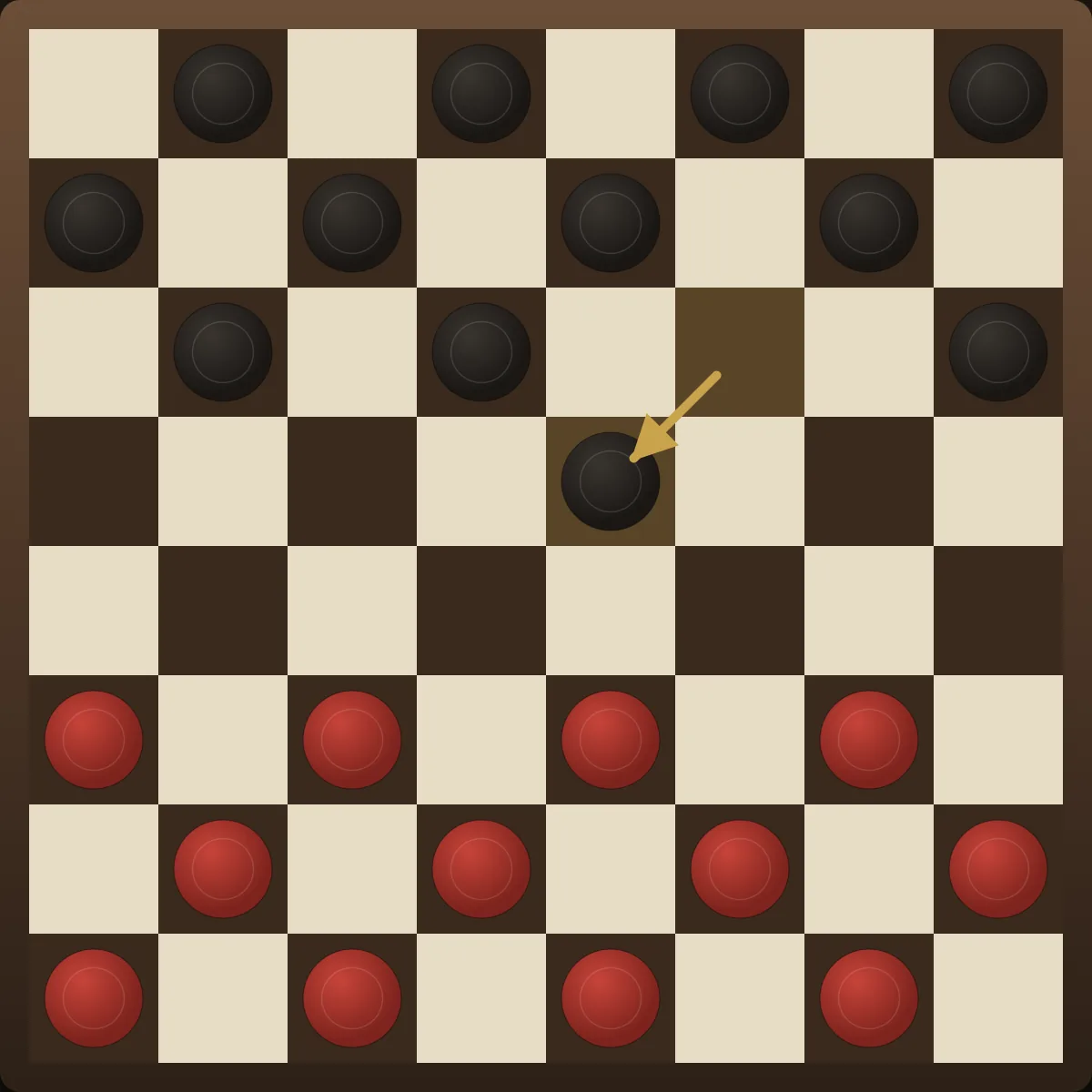
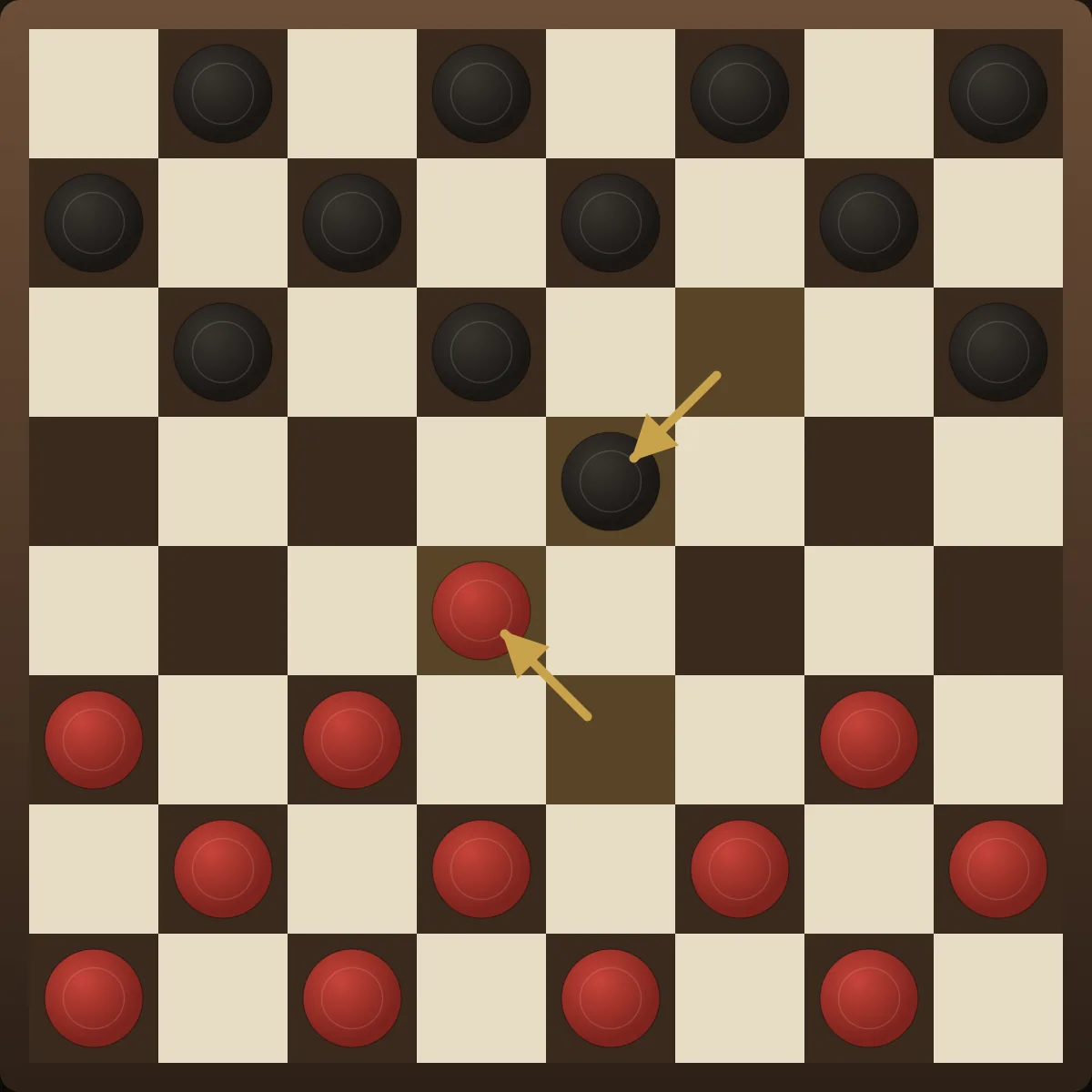
The Cross (11-15, 23-18)
The Cross arises when the first player plays 11-15 and the second answers 23-18, crossing into the center from the other side. It leads to sharp, double-edged positions and is a favorite of attacking players. It's more demanding than Old Faithful because the resulting lines require accurate follow-up, but it's a great next step once the basics feel comfortable.
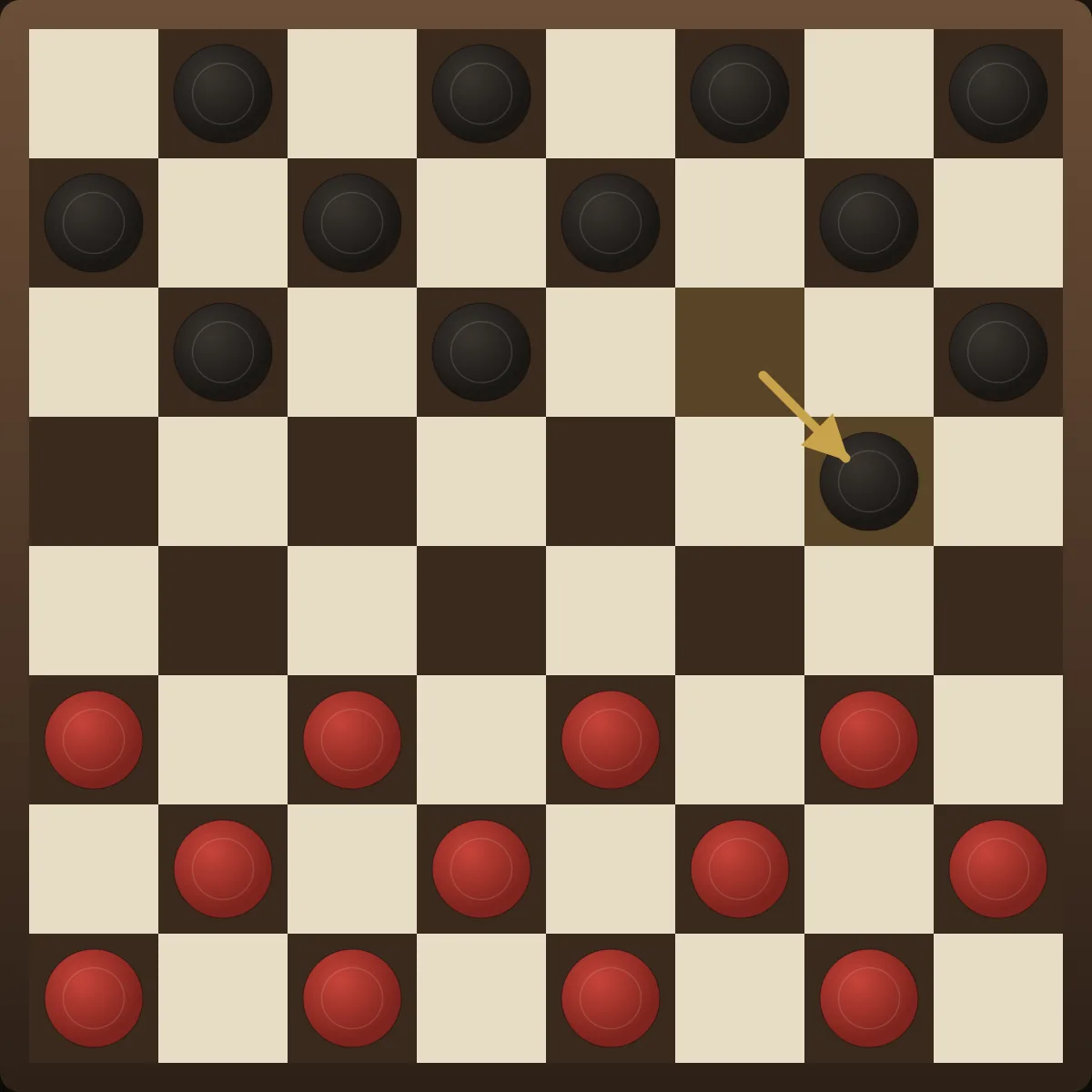
The Bristol (11-16)
The Bristol opening (11-16) develops down one side and aims for fast, aggressive play, often pushing pieces up a flank early. It's tricky for both sides and can wrong-foot an unprepared opponent, but it commits you to a plan early — best in the hands of a player who knows the follow-ups. Treat it as an opening to grow into.
What opening should a beginner use?
Start with Old Faithful (11-15) every game until central play feels natural. It teaches you the single most important opening idea — fight for the middle, keep pieces supported — without the calculation burden of sharper lines. Once you're comfortable, branch into the Cross to learn how to handle attacking positions.
Opening principles that matter more than memorizing lines
- Take the center; avoid the edges. Edge pieces have fewer moves and can't support an attack. Beginners hug the edges for safety and slowly get squeezed.
- Keep pieces supported. A lone advanced piece is easy prey; pieces that back each other up can't be captured cheaply.
- Hold your back row. Keeping your king's row intact early denies the opponent the squares to crown a king.
- Don't rush captures. Because captures are forced, an early grab can walk you into a two-for-one shot. Always check what your opponent can force back before you commit.
- Develop with a plan. Every opening move should improve your position, not just push wood.
Remember: openings set up the middlegame
A good opening doesn't win on its own — it hands you a healthy position to work with. The advantage you build in the first few moves is cashed in later through tactics and the endgame. Once your opening is solid, the Tactics guide is where games are actually won.
Practice your openings
The fastest way to internalize an opening is to play it. Start a game against the computer, open with 11-15, and see how the center develops — play now.